

There are places where water is a daily struggle. Communities where residents wake before sunrise, queue with buckets and containers, wait for water tankers or walk long distances simply to get enough water for cooking, bathing and drinking. Then there is Bwari. In this part of the Federal Capital Territory, water tells a somewhat different story. Let’s talk water supply in Bwari.

Beneath the soil, water is remarkably close. In many parts of Bwari, residents do not have to dig very deep before encountering the resource that has quietly shaped everyday life in the community.
For generations, this natural availability has been one of Bwari’s understated blessings.

A Community Sitting on Water
Bwari’s relationship with water begins beneath its feet. The land has a reputation for being relatively easy to access for groundwater. In many locations, a borehole can reach water without the extraordinary depth or expense that residents of some other communities may face. That natural advantage has had a profound effect on life in Bwari.
It means that the sound of a borehole pumping water is not unusual. It is part of the rhythm of everyday life.
In many homes, water is not something residents have to wait for a tanker to deliver. It can be drawn from boreholes and wells within the community.
This has also shaped the local water economy. The traditional business of selling water by mobile water vendors, popularly associated with Mairuwa, has not become as dominant in Bwari as it is in communities where access to groundwater is more difficult. Where water is readily available, the economics of buying water from a vendor changes. People naturally prefer to fetch their own.
The Borehole That Changed the Meaning of Home
For many families, having a borehole is more than having a source of water. It changes the meaning of comfort.
A family can wake up in the morning and turn on a tap. Children can bathe without waiting for a water vendor. Clothes can be washed when necessary. Food can be prepared without first calculating how many litres remain in a storage tank.
These may appear to be ordinary things. But in places where water is scarce, they are privileges. In Bwari, the relative availability of groundwater has allowed many households to enjoy what residents of other communities spend considerable time and money trying to secure: water within or close to the home. Yet Bwari’s story does not end with what nature provides. The government has increasingly become part of the story.
The Water Projects You Cannot Miss
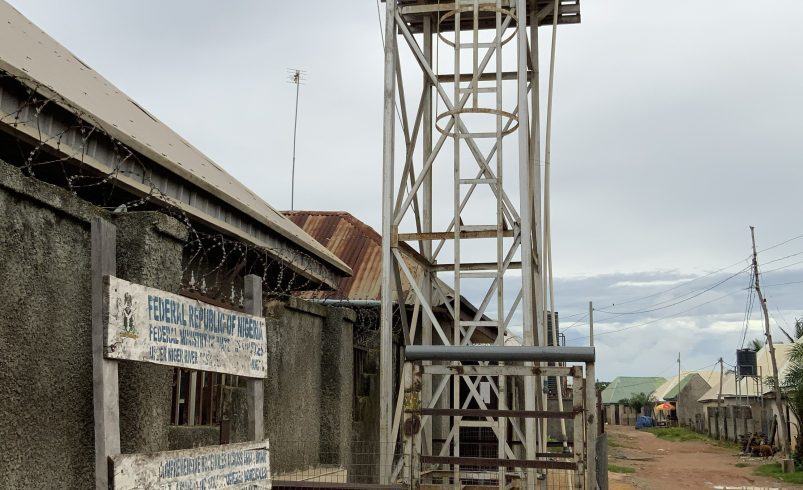
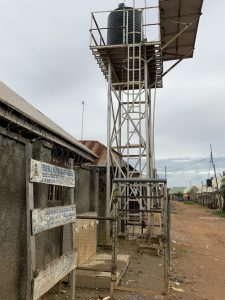
Walk through Bwari and one begins to notice something. Water projects are not confined to a single neighbourhood or major public facility.
They appear along streets and within communities. Government water infrastructure has become a visible feature of the landscape, reflecting efforts by public authorities to expand access to clean and reliable water. For a community growing as rapidly as Bwari, this intervention matters. Population growth brings pressure on virtually every basic service. More houses mean more people. More people mean greater demand for water. Natural groundwater may provide an advantage, but population growth requires infrastructure capable of serving an entire community. This is where government intervention becomes important.
Every Street, Every Household
The ambition now goes beyond simply having water projects scattered around the community.
The bigger question is whether water can actually reach people’s homes.
That is the next chapter in Bwari’s water story.
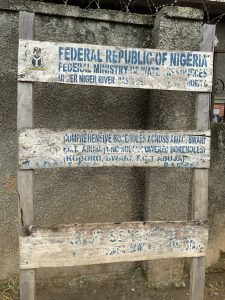
The Federal Capital Territory Administration and the Bwari Area Council have been working together to expand water access, with infrastructure intended to move the community closer to a future where residents can access water directly from their homes.
The project has been completed and is awaiting final commissioning before residents can begin connecting to and drawing water from the system.
For the people of Bwari, that final step is significant.
A public water project sitting in a community is one thing.
Water flowing through the taps of ordinary households is another.
The real measure of success will ultimately be found inside people’s homes.
Why This Matters to Bwari
Reliable access to clean water is not simply an infrastructure issue.
It is a health issue.
It is an economic issue.
It is an education issue.
And it is a quality of life issue.
When families have dependable water, they spend less time searching for it. Small businesses that depend on water can operate more efficiently. Restaurants, food vendors, salons, laundries and other businesses can function with greater certainty.
Children spend less time helping families source water and more time doing what children should be doing.
For women and households that traditionally carry much of the responsibility for domestic water collection, reliable household supply can also mean more time for work, business and family.
That is why the completion and commissioning of a public water system is more than the unveiling of another government project.
It can change the daily routine of an entire community.
Bwari’s Quiet Water Advantage
There is an interesting contradiction in Bwari. The community is blessed with groundwater, yet public authorities continue to invest in water infrastructure. At first glance, the two may appear unnecessary together.
They are not. Natural resources can provide an advantage, but public infrastructure provides structure, quality control and wider access. A borehole can serve a household. A properly planned public water system can serve a community. That distinction matters as Bwari grows.
The Bwari of today is not the Bwari of decades ago. New houses continue to appear. Communities are expanding. More people are moving into the area. The demand for water will therefore continue to increase.
Bwari’s Water Story Is Still Being Written
Bwari has something many communities desperately need: water beneath its soil. But nature alone cannot build a modern community.
The responsibility now is to transform that natural advantage into a reliable, safe and sustainable public resource.
Government projects, community participation and responsible management will all determine whether the promise of running water becomes a permanent reality for households across Bwari. For now, the pipes are there. The projects have been completed. The community is waiting for the final commissioning. And beneath the streets, beneath the homes and beneath the growing town, Bwari’s greatest natural blessing continues to flow.
Water has always been part of Bwari’s story.
The next chapter may be about making sure every home can experience it.
Bwari Water Supply: What Residents Should Know
Does Bwari have groundwater?
Yes. Many parts of Bwari have relatively accessible groundwater, which has made boreholes an important source of household water.
Is there government water infrastructure in Bwari?
Yes. Government water projects have been developed across different parts of the community as part of efforts to improve access to clean water.
Will residents have running water in their homes?
The current water infrastructure project is intended to extend water access closer to households. The project has been completed and is awaiting final commissioning before residents can begin benefiting from the system.
Why is the Bwari water project important?
Reliable household water can improve sanitation, reduce the cost and stress of sourcing water, support local businesses and improve the general quality of life for residents.
Who is responsible for improving water access in Bwari?
Water infrastructure involves government intervention, including collaboration between the Federal Capital Territory Administration and the Bwari Area Council, alongside household and community level water sources.
Follow us Facebook for updates. Contact us to feature your story.