

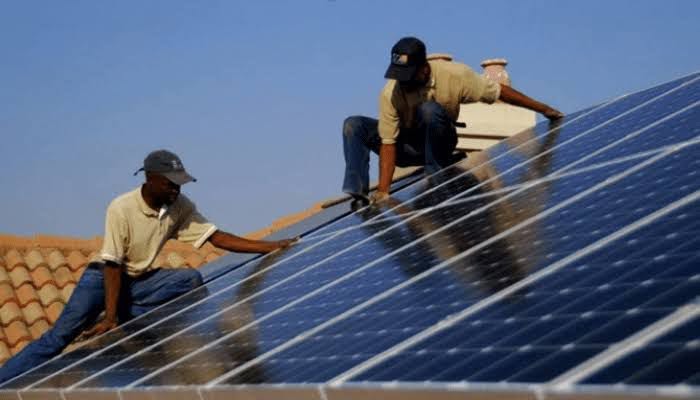

There have been claims circulating that Nigerians who install solar systems in their homes will soon start paying a new solar tax.
However, available information does not currently confirm a nationwide tax specifically imposed on households simply because they use solar power.
Under Nigeria’s 2026 tax framework, qualifying renewable-energy equipment such as solar panels, inverters, batteries and charge controllers continues to enjoy important tax reliefs. Current information indicates that qualifying solar equipment remains exempt from import duty and VAT under the applicable provisions and customs classifications.
So where did the “solar tax” story come from?
The confusion appears to be linked to discussions around Nigeria’s new tax regime, VAT treatment of renewable-energy equipment and possible regulatory requirements for solar installations.
The Nigerian Tax Act contains provisions dealing with VAT treatment of renewable-energy equipment, but VAT on certain listed items is subject to the applicable statutory conditions and ministerial directives. It should therefore not be interpreted as a blanket tax on every Nigerian household using solar.
Read Also: Why do pupils write on their textbooks
Does this mean solar users will never pay anything?
Not necessarily.
Depending on the type of installation, location, service provider and applicable regulations, a solar customer could still encounter installation charges, service fees, regulatory/permit requirements or other applicable costs.
But that is different from saying that the Federal Government has introduced a general “solar tax” on every household.
As of September 2026, there is no verified nationwide Nigerian policy requiring every household with solar panels to pay a new solar tax simply for using solar energy.
Before paying anyone claiming that a new “solar tax” has commenced, ask for the official government regulation, gazette or directive establishing the charge.
BwariTimes will continue to monitor developments around Nigeria’s tax and energy policies and update readers when there is an official change.