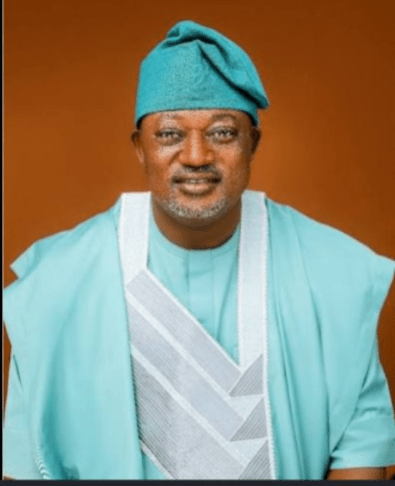



Oyiza Rhoda Adinoyi is the overall best graduating student of the Prince Abubakar Audu University, Kogi State, for the 2024-2025 session, from the Department of History and International Studies. She finished with a cumulative grade point average (CGPA) of 4.93 on a scale of 5.0. In this interview by OLANSHILE OGUNRINU, she speaks on her academic journey, among other issues.
OU showcased a high level of excellence and academic performance at the university level. Was this the case during your primary and secondary school education, and in your SSCE and UTME results?
I have always been a high-performing student from the onset, and I try my very best to maintain that. I grew up in a family where education is highly valued. So, I never grew up with the option to do less or be an average student.
During my primary and secondary school years, I was a diligent student and consistently pertormed well, although I was not always the overall best student. My results were very good and gave me the foundation I needed to pursue higher education. I also performed well in the UTME and secured admission to study History and International Studies at the Prince Abubakar Audu University.
However, it was at the university that my academic potential truly flourished. The university environment challenged me to think critically, conduct research, and push beyond my limits. I developed a disciplined study routine, sought mentorship, and became intentional about academic excellence.
You graduated as the overall best-graduating student of Prince Abubakar Audu University, with an outstanding CGPA of 4.93 out of 5.0. Did vou see this coming? And what did the achievement mean to you?
I actually saw it coming. From the moment I gained admission into Prince Abubakar Audu University, I set a clear goal for myself: to graduate with a First Class degree and emerge as the overall best-graduating student. That vision shaped how l approached every semester. I remained disciplined, consistent, and intentional, knowing that excellence is built through daily commitment rather than last-minute effort.
Graduating with a CGPA of 4.93 out of 5.0, making me the overall best-graduating student, was a deeply fulfilling moment. It was not just a personal achievement; it validated years of hard work, resilience, and sacrifice. More importantly, it strengthened my belief that when you combine a clear vision with unwavering dedication, extraordinary outcomes are possible.
What principles or habits helped you maintain such excellence and consistency throughout your undergraduate years? Were there moments when you doubted yourself or faced academic setbacks?
Consistency was my greatest strength. I approached every semester with the same level of seriousness, never allowing a good result to make me complacent or a difficult course to discourage me. I attended lectures, studied intentionally, managed my time well, and constantly reminded myself of the goal I had set from the very beginning. I also understood that excellence is a daily habit, not a one-time achievement.
Of course, there were challenging moments. Some courses were demanding, and there were times when I felt exhausted or uncertain about the outcome. But I never allowed temporary setbacks to define me. Instead, I sought guidance from my mentor, adjusted my study strategies where necessary, and kept moving forward. I learned that resilience is just as important as intelligence, and that every challenge is an opportunity to grow.
Why did you choose to study History and International Studies? How did you come to study it at Abubakar Audu University?
My decision to study History and International Studies was driven by a genuine curiosity about how societies evolve, how power is exercised, and how past events continue to shape our present and future. I have always believed that understanding nistory is essential to understanding people, institutions, and the world around us.
The Prince Abubakar Audu University gave me the opportunity to pursue that passion, but it also gave me something equally valuable: mentorship. It was there that I met my academic mentor, Professor Danladi Abah, whose guidance exposed me to research early in my undergraduate years. His mentorship broadened my intellectual horizons and played a significant role in shaping my journey as a young historian and researcher.
What aspects of history and international studies interest you more, and why?
I have many interests ranging from social and cultural history to war history and even digital culture. However, my strongest interests are in economic and intellectual history because they help us understand not just what happened in the past, but how ideas and economic systems have shaped the world we live in today. I am particularly fascinated by how colonialism transformed African markets, produced new ways of thinking about poverty and development, and influenced the trajectories of postcolonial societies.
I hope to contribute to debates on colonial economic history and the history of ideas. My goal is to use historical research to deepen our understanding of Africa’s development challenges and inform more thoughtful public policy.
What was your final-year project work about, and its major findings and significance to society?
My final-year project was titled ’The history of Inland Ebira and the Nigerian Civil War, 1967-1970. Drawing on oral interviews, archival materials, and secondary sources, I explored how the civil war shaped the experiences of the Inland Ebira people (located in present-day Kogi Central), a community that has received limited scholarly attention.
My findings revealed that, although the war was not fought directly in Ebira land, it profoundly affected the community through fear and tension, loss of lives, aerial bombing, military recruitment, and shifting economic opportunities. The study contributes to society by preserving an overlooked aspect of Nigeria’s history and demonstrating the importance of local experiences in building a more complete understanding of the nation’s past.
According to your Linkedln bio, you began presenting academic papers at conferences in your 300 level, something uncommon among undergraduates. What motivated this, and were you the one who wrote the papers? And how did the experience shape your academics?
My journey into academic writing began in my second year when one of my lecturers, Dr Kola Olubiyo, who is now at Bowen University, recognised my potential and invited me to co-author a paper with him. That experience introduced me to academic research and writing much earlier than most undergraduates. So, yes, I wrote and co-authored the papers presented, working closely with my collaborators where applicable.
By my third year, I already had considerable public speaking experience as a class representative, group and individual class presentation leader, and the founder of Rhogeria Historophiles, where I tutored students and regularly delivered presentations.
However, presenting before a room full of scholars at a conference was a completely different experience. My first conference presentation was a co-authored paper with a final-year student at our department’s Annual Democracy Day Lecture and Conference. That experience gave me the confidence to pursue more academic engagements. Since then, I have written papers and presented twice and chaired a panel at the Lagos Studies Association Conference (2025 and 2026), and I also had the privilege of serving as a student panellist at the Historical Society of Nigeria @70 Congress in 2025. These experiences sharpened my research, writing, and public speaking skills, and strengthened my resolve to pursue a career in academia.
Your recent paper presentation at the Lagos Studies Association Conference explored digitality and body agency in African womanhood. What inspired this research topic?
I became particularly interested in the concept of body agency and wanted to understand how similar or different contemporary cosmetic surgery is from pre-colonial African forms of body enhancement. In many African societies, women historically engaged in practices such as body adornment, scarification, waist-bead use, fattening traditions, hairstyling, and other forms of aesthetic modification that carried social and cultural meanings.
My paper, ‘My body, my power: Digitality and the reimagining of body agency in African womanhood from pre-modern fashion to surgical enhancement’, explored whether modern cosmetic procedures such as BBLs and other surgical enhancements should be seen simply as foreign influences or as part of a longer historical continuum of how women negotiate beauty, status, identity, and autonomy. The research argues that digital technologies have transformed the scale, visibility, and commercialisation of body enhancement, but the desire to shape and present the body has deep historical roots in African societies.
Moving on, what advice would you give undergraduates who assume serious research and paper presentation are meant mainly for postgraduate students and lecturers?
I would encourage them not to underestimate themselves.
Research is not reserved for postgraduate students or lecturers; it begins with curiosity and the willingness to ask meaningful questions. If you start early, seek mentorship, and remain committed to learning, you can make valuable scholarly contributions even as an undergraduate.
My own journey is proof of that. So, my advice is simple: read widely, write consistently, seek constructive feedback, and never be afraid to share your ideas. You do not have to wait until postgraduate studies to begin contributing to knowledge.
If you were to represent Nigeria as an ambassador, which country would you like to serve and why? What two major contributions would you initiate between Nigeria and the country?
That is a reflective question, considering the fact that I have a list of potential countries, if the opportunity arises. But I think I would choose Germany because of its strong tradition of research, innovation, vocational education, and industrial development. As someone whose interests lie in economic and intellectual history, I believe Germany offers valuable lessons on how knowledge, technology, and institutions can drive national transformation.
If given the opportunity, I would champion two key initiatives. First, I would expand academic and research partnerships between Nigerian and German universities to promote student exchanges, joint research, and capacity building for young scholars. Second, I would strengthen collaboration in technical education, innovation, and industrial skills development, enabling more Nigerian youths to acquire practical skills while promoting investment and technology transfer between both countries.
WATCH TOP VIDEOS FROM NIGERIAN TRIBUNE TV